Michael Orwick Arts


Of Rigor and Reward or why I paint outdoors

“An artist must possess Nature. He must identify himself with her rhythm, by efforts that will prepare the mastery which will later enable him to express himself in his own language.”  Henry Matisse


Of Rigor and Reward


I don't exactly understand why painting in nature affects me so deeply.  It must have something to do with taking time for deeper observation and reflection within the macrocosm.  For just a little while, I move outside of myself, away from the hustle of everyday life. 

When painting outdoors is going well, it is like a meditation or deep prayer, but it can often feel daunting.  Maybe you have felt that paradox, too.


Mother Earth does not give up her secrets easily or quickly.  Wouldn't it be easier to simply paint in a comfortable studio, where light is controlled, tools are at hand, and the scope of the scene is already selected?  No rain, no drifting shadows. For me, despite this conundrum, I somehow pluck up the courage to face the test inherent in the task, and I once again pack up my easel, load it into my Honda, and return to nature, undeterred, with my head bowed in reverence, my spirit eager and happy to learn just a little more from the great and demanding Teacher.
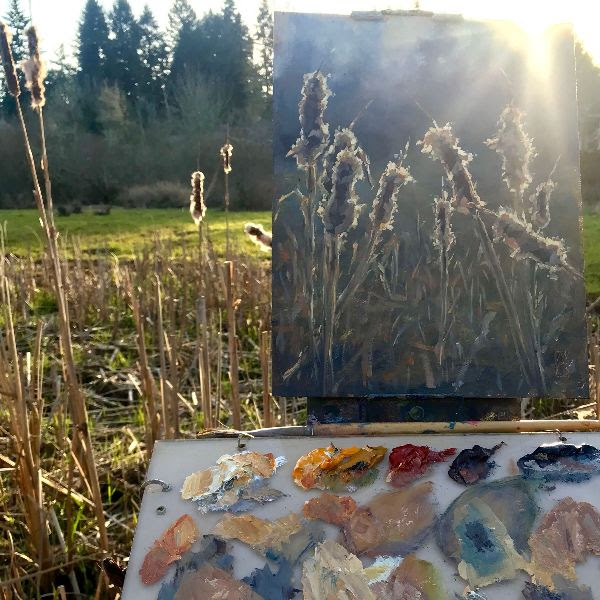


Once I arrive, unload the SUV and set up my easel, paints, and brushes, I survey what nature has to offer. Is this a moment of serenity?  No. Nature can fling so much at me that it is difficult to simplify and organize this information overload. As I begin, I ask myself, how can I capture even one small part of the beauty before me?  Then I remind myself of Ralph Waldo Emerson's advice: “Adopt the pace of nature: her secret is patience.”-and slowly, with much effort, and counting on the struggle to be part of its own reward, I am able to find focus and start a visual correspondence with the scene.


Gradually, as I start to paint, the process becomes about me, as the artist, and this place, this time together with my subject, the influence of light, the weather conditions and everything else that is in the air.  It not only includes the wind and bugs, but also the sounds and smells.


As Neil Gaiman wrote in The Graveyard Book,  " Wherever you go, you take yourself with you.” Painting in nature forces me to be keenly aware of myself, yet willing to get out of the way, to practice humility and to clear my ego.  It is thus that I may show gratitude while I try in some little way to honor the beauty before me.   And it is then that I experience the freedom in nature, the sky, the trees, the grasses, the piercing light, the mysterious shadows-and it is then that nature becomes part of my own nature. 

Just as Albert Einstein wrote, “Our task must be to free ourselves…by widening our circle of compassion to embrace all living creatures and the whole of nature and its beauty,” 


“Almost everything will work again if you unplug it for a few minutes...Including you."  -  Anne Lamont


How do you unplug? 


Does being in nature refresh you?


facebook.com/MichaelOrwickArts
https://www.instagram.com/michaelorwick/
Orwick Arts
 
You Are Awesome! 
Copyright © *2020 *Orwick Arts LLC*, All rights reserved.

Want to change how you receive these emails?
You can update your preferences or unsubscribe from this list.
 
“I wanted the reward and not the struggle. I wanted the result and not the process. I was in love not with the fight but only the victory. And life doesn't work that way.”

Read Full Post


Collecting art the Vogel Way


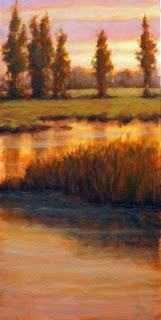
All Paintings Shown are painted by Michael Orwick www.michaelorwick.com
and are available from Cole Gallery http://www.colegallery.net/index.php
107 5th Ave SEdmonds, WA 98020 Phone: (425) 697-2787Fax: (425) 672-4986 [email protected]


Ordinary folks assembled extraordinary art collection

How two ordinary people collected an amazing art collection in their one bedroom apartment.

"You don't have to be a Rockefeller to collect art. I thought I was rich having good art," said Mr. Vogel

To build their collection, the Vogels purchased small pieces created by relatively unknown artists.
"They really bought what they liked, and they weren't so concerned about market value," said Sarah Urist Green, assistant curator of contemporary art for the Indianapolis Museum of Art.

…the Vogels' story holds a lesson for anyone interested in collecting art -- regardless of budget constraints.

"If you go out and you dedicate yourself to getting to know what's happening with young artists and emerging artists and what's happening in your community, I think opportunities can present themselves," said Green.

To read more of the article
http://www.indystar.com/article/20081221/LIVING19/812210317/1275/LIVING19

"Dorothy and Herb talk about how much they enjoyed living with this art, and thinking about it," Green said.

Despite their vast collection, the Vogel's weren't wealthy when they started buying art in the 1960s. They purchased pieces from emerging artists, which allowed them to amass such a large collection. Since then, many of those artists have become renowned.

Selected quotes from
50 artworks, 50 states
Dorothy and Herbert Vogel's gift to the IMA is part of a plan to distribute 2,500 pieces
http://www.indystar.com/article/20081221/LIVING19/812210329


Collecting Priceless Art, Just for the Love of It

"I thought I was rich having good art," said Mr. Vogel, who delights in showing up at openings exuberantly "clashed," as he puts it, in plaid pants and a houndstooth overcoat. "We never bought anything because we thought it was important. We bought things we liked. It's not about price. It's about feeling."

Mrs. Vogel says: "How do you put a price on something, or someone, that is close to you?"

The story of the Vogels is like a fairy tale," said Mr. Tuttle, who is represented in their collection more than 350 times over. "Maybe people don't want to figure out the fairy tale." In this fairy tale, he says, the so-called postal clerk happens to have "a pedigree that goes back to the Abstract Expressionists."

…The curator says it is impossible to estimate the monetary value of the collection. Some of the artists represented, like Mr. Tuttle, Mr. LeWitt and Mr. Mangold, now sell their work for tens of thousands of dollars.
When choosing where to put much of their collection...
Money did have something to do with the Vogels' choosing the National Gallery. "They've never sold a painting," Mr. Vogel said. "And admission is free."

selected quotes from
http://query.nytimes.com/
All the best,
Michael Orwick

Orwick Arts

http://michaelorwick.blogspot.com/https://www.michaelorwick.com/ My art hints at a story and then invites you to finish the narrative. My style has been called Inspired Expressionism, which combines impressionistic brush strokes and a touch of realism to create the atmosphere and lighting woven into my work.

Read Full Post